Laiye RPA V6.7 Automation Commander Enterprise Officially Released: A Major Upgrade to Agent-driven Execution
As agentic AI technologies continue to evolve and enterprise automation requirements grow more complex, RPA is no longer limited to executing predefined processes. It is increasingly serving as a core execution layer that supports agent-driven automation scenarios.
Following the release of Laiye RPA V6.6 Automation Commander Enterprise in October 2025, which delivered significant improvements in stability, enterprise readiness, and real-world deployment experience, Laiye RPA V6.7 Automation Commander Enterprise, is now officially released.
This update introduces key enhancements centered on agent-based scheduling, organizational governance, and long-term operational stability, representing both a natural continuation of V6.6 and a meaningful step forward for the agentic automation era.
Agents can now directly schedule RPA via MCP
In RPA Enterprise V6.7, Automation Commander officially supports the MCP (Model Context Protocol) service endpoint, exposing scheduling capabilities in a standardized service form.
Through the Product Access Address/automation/mcp endpoint, MCP-compliant agent clients can connect directly to the platform and invoke RPA capabilities as tools, enabling intelligent, agent-driven scheduling and execution.
Currently supported MCP tools include:
- Create Task: Assign a Process Worker to execute a specified automation process.
- Query Task Execution Result: Retrieve execution status and results based on a task ID.
- Query Task Template :Obtain task template information and required parameters for task creation.
With these capabilities, RPA can now be invoked directly by agents as an execution tool—enabling closer integration between agent systems and enterprise automation workflows, and providing a critical foundation for end-to-end intelligent automation.
Personal tokens and task templates: more secure, more efficient scheduling
Personal token
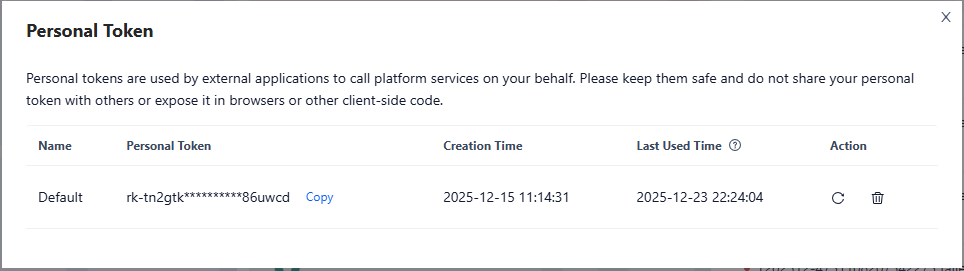
RPA Enterprise V6.7 introduces Personal Token as secure user identity credentials for external platforms scheduling Automation Commander services.
Users can manage their personal tokens directly from the user menu, reducing account-sharing risks while improving security and control in cross-platform orchestration.
Task template
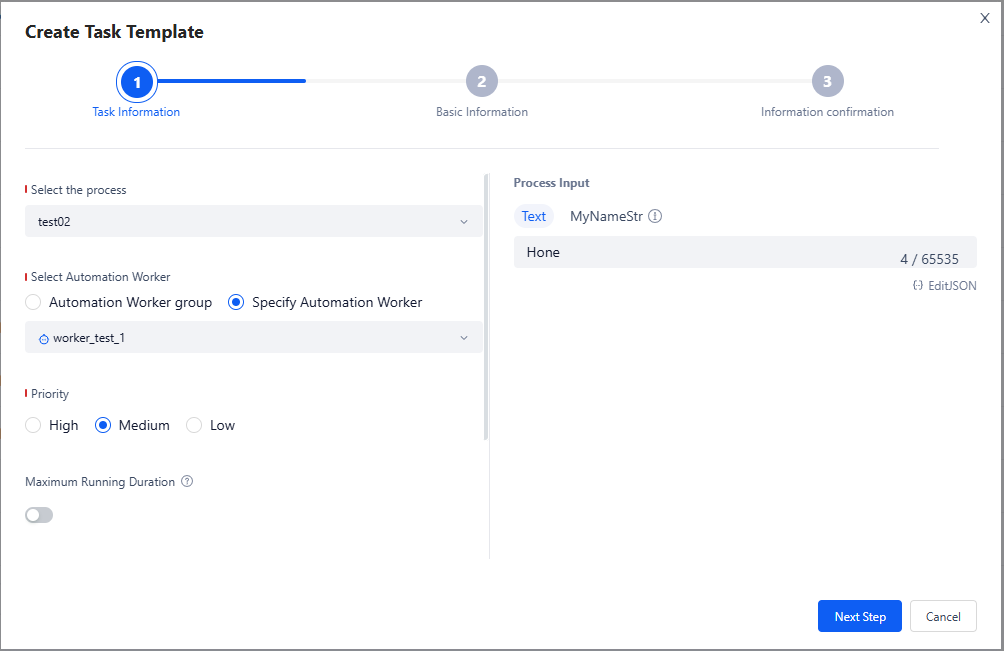
Frequently used task creation configurations can now be saved as Task Template, enabling faster and more consistent task creation.
Agent platforms can retrieve task template metadata as reference inputs when generating tasks, laying the groundwork for automated, large-scale, and repeatable scheduling workflows.
Enterprise-grade governance: department administrators introduced
As RPA adoption scales across organizations, fine-grained access control and data boundaries become increasingly critical.
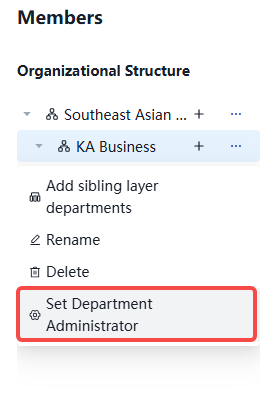
In RPA Enterprise V6.7, Automation Commander introduces the Department Administrator role, configurable by the Primary Administrator through the Management Console. This enables more precise, organization-level governance.
Key capabilities include:
- Primary administrators can assign or remove multiple Department Administrators at any organizational level.
- Department Administrators are built-in roles with permissions spanning their department and all recursively subordinate departments.
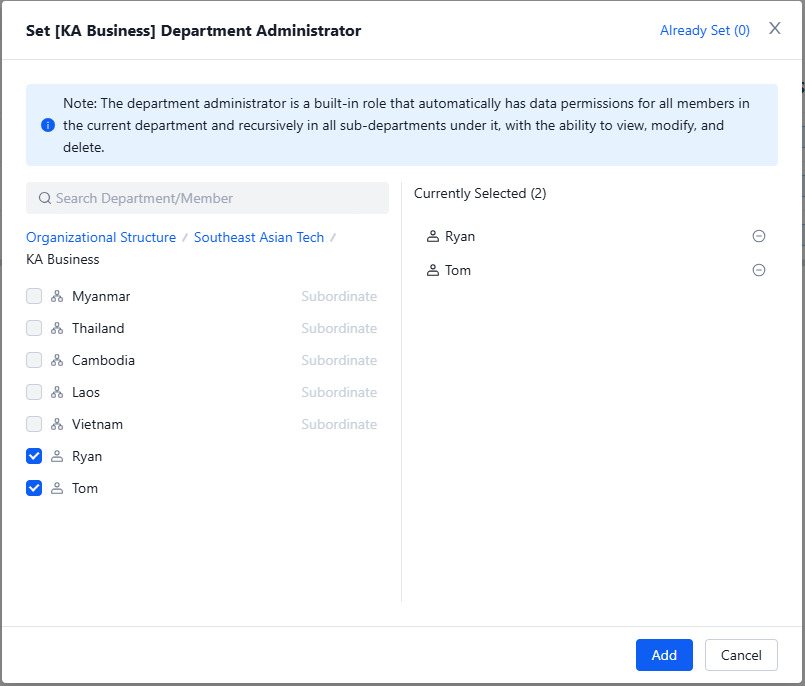
- Authorized administrators can view, edit, and delete core objects, including:
- Process Workers (unattended, real-time monitoring)
- Processes
- Tasks and task templates
- Triggers (time-based, queue-based)
- Data assets (parameters, queues, files, credentials)
- All administrator changes are fully recorded in Management Console operation logs, supporting security audits and compliance requirements.
Stability, security, and operational enhancements
Beyond new features, RPA Enterprise V6.7 delivers multiple optimizations and fixes across critical production areas, including:
- Improved robustness of unattended Process Worker recording and log uploads
- Enhanced element recognition in complex UI and iframe scenarios
- Better error traceability and diagnostic clarity
- Resolution of known high-risk CVE vulnerabilities across the underlying technology stack
These enhancements further strengthen system stability and reliability in real-world enterprise environments.
Long-term support commitment
Version 6.7 has been established as the long-term support (LTS) version for the RPA product line.Throughout its entire lifecycle, Laiye will continue to provide comprehensive technical support, including functional defect fixes and critical security vulnerability remediation—ensuring long-term stability and confidence for enterprise customers.
Moving forward
Laiye remains committed to advancing RPA toward deeper intelligence and tighter integration with agentic automation systems.
We invite you to explore the new capabilities of Laiye RPA V6.7 Automation Commander Enterprise and discover how automation can play a more intelligent, flexible, and impactful role across your business workflows.
Try it for Free Now